Physics Laboratory
Physics practicals help students understand concepts through instruments, observation and demonstration. From motion and force to light, electricity and measurement, students experience how theory works in real situations.
9675677111 Principal.pinkmodel@gmail.com Affiliation No.: RBSE / Board of Secondary Education Rajasthan
At Pink Model School, our science laboratories help students move beyond theory and explore concepts through observation, experimentation, and practical understanding.
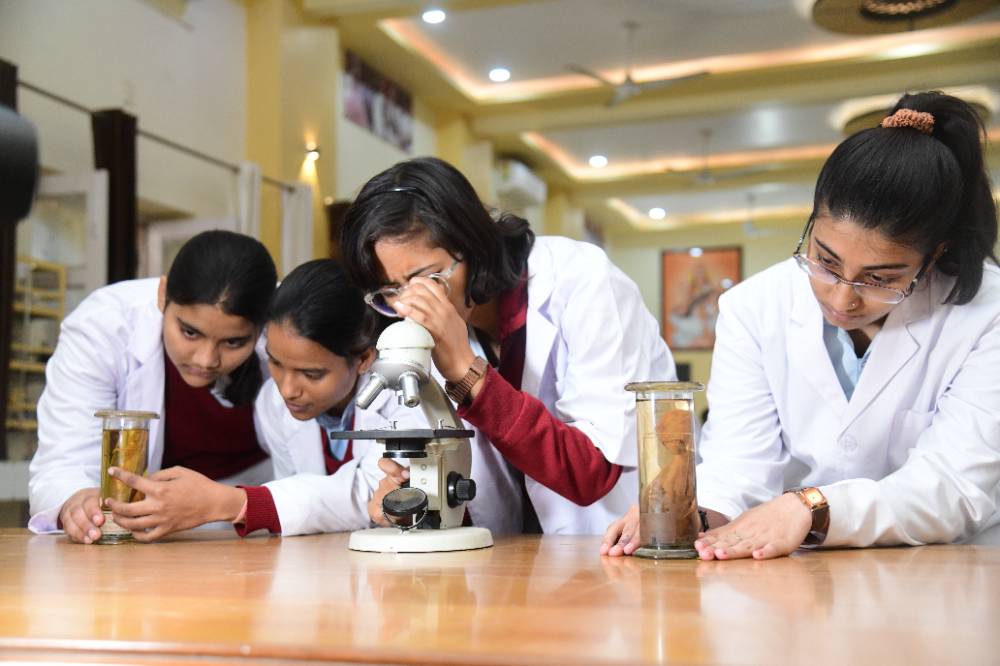
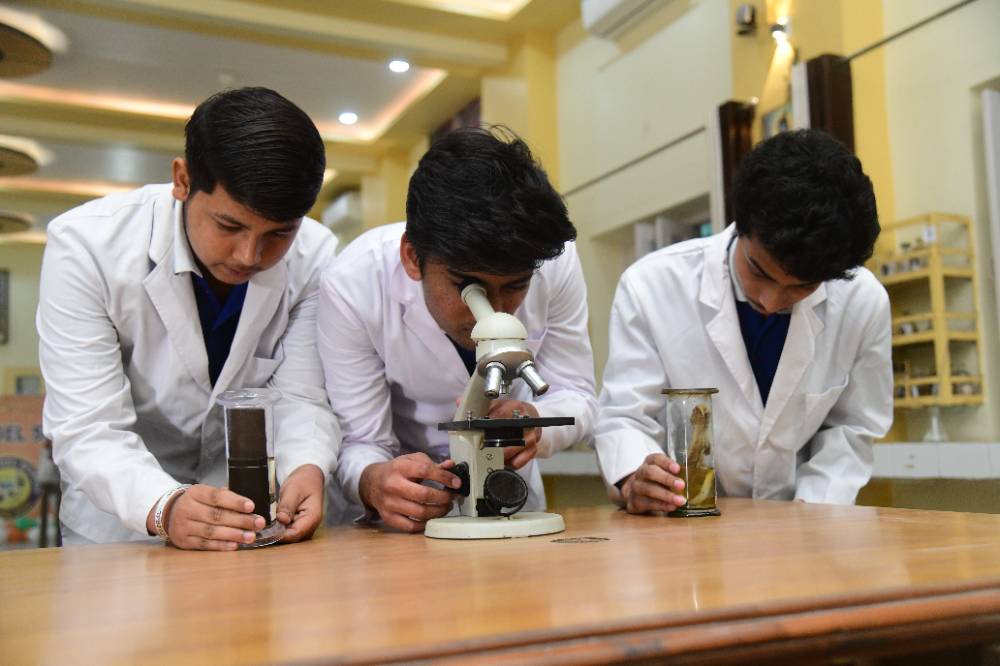
Science becomes meaningful when students can see, touch, measure and question what they study. Our lab environment connects classroom concepts with real-world understanding through carefully guided practical sessions.
Different branches of science need different ways of thinking. The lab spaces help students observe principles, test ideas and understand learning through practice.
Physics practicals help students understand concepts through instruments, observation and demonstration. From motion and force to light, electricity and measurement, students experience how theory works in real situations.
Experiments, reactions and safe practical understanding help students build confidence while learning chemical concepts with care.
Observation, specimens, diagrams and life science study help students connect textbook biology with visible evidence.
Every experiment follows a structured learning rhythm so students do not simply perform a task, they understand why it matters.
Students notice apparatus, reactions, specimens or measurements carefully.
They perform practical steps under teacher supervision.
Results are compared, questioned and connected with theory.
Students learn accuracy through diagrams, readings and notes.
Concepts become clearer because students have experienced them.
Practical science builds habits that stay with students far beyond one chapter or one examination.
Abstract ideas become visible and easier to remember.
Students learn to notice details, changes and patterns.
Experiments encourage children to ask better questions.
Students compare outcomes and develop scientific thinking.
Hands-on practice builds confidence in practical work.
Learning feels active, meaningful and connected with life.
Safety and discipline are part of the laboratory culture. Students learn to use equipment carefully and follow instructions before, during and after practical work.
Practical sessions are guided so students understand both the method and the reason behind it.
Students are trained to handle apparatus, specimens and materials responsibly.
Organized practical work builds patience, attention and respect for safety rules.
Students learn the importance of cleanliness, order and careful observation.
The right tools help students move from guesswork to evidence-based learning.
Students develop careful observation skills through microscope-based biology learning and practical demonstrations.
Measurement builds accuracy, patience and numerical confidence.
Visual aids make complex structures easier to understand.
Apparatus and experiment materials support concept clarity.
Students learn to record observations neatly and scientifically.
The lab is not just about equipment. The teacher guides students through each concept, experiment and observation so that learning remains meaningful, safe and well-structured.
Students are encouraged to ask questions, compare outcomes and connect each practical activity with classroom learning.
Hands-on science creates confident learners who are ready to observe, reason and understand.
Students understand the why behind the topic.
They learn to notice details and evidence.
Curiosity grows through active exploration.
Practice turns learning into confidence.
Students compare, question and conclude.
Regular exposure helps students perform better.
This collage is designed for real lab visuals and can be updated easily with new science laboratory photographs.
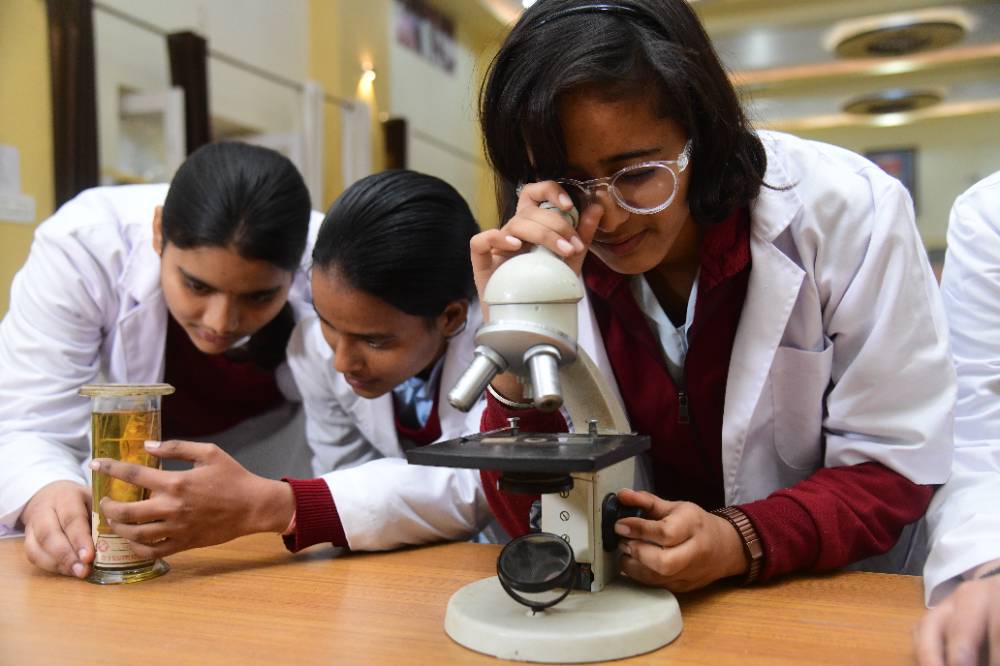
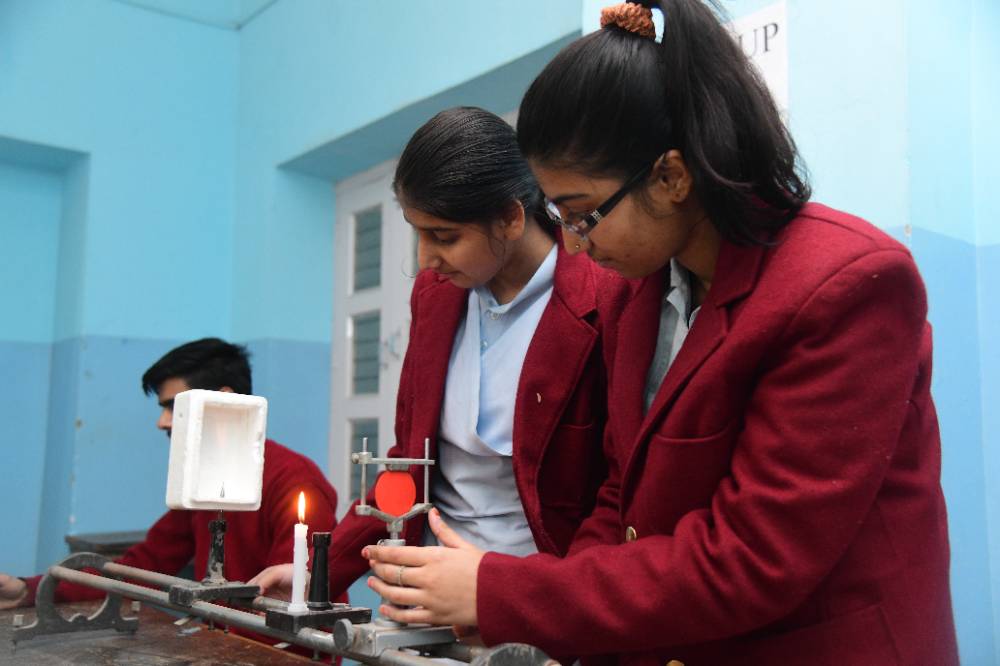
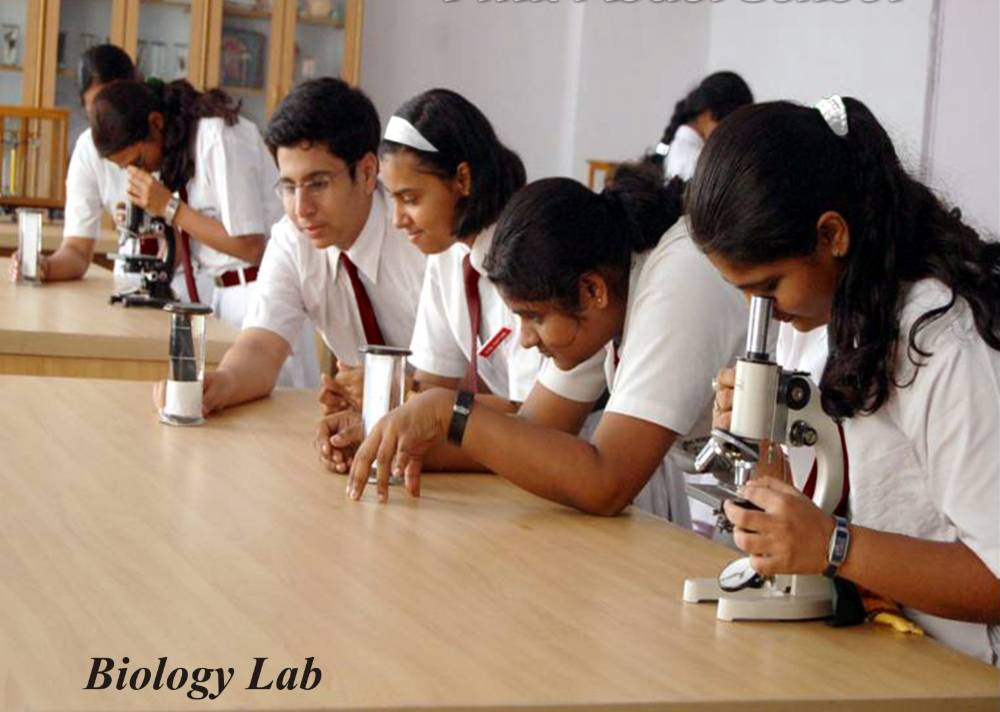
Add new Physics, Chemistry or Biology laboratory photos here without changing the page design.
Science laboratories create an environment where students do not simply accept facts, they investigate them. They learn to ask what, why and how, and they begin to connect science with the world around them.
This discovery-based learning helps children think deeper, stay observant and develop respect for evidence, discipline and practical understanding.
Visit Pink Model School and explore how our science laboratories make learning more engaging, hands-on, and meaningful for students.